From Customer-Led Development: How to Build What Your Customers Want When AI Can Build Anything — the operating manual for building what customers want when AI can build anything. See every chapter.
Every churned customer used to come with an excuse attached, and the excuses were usually true. We didn't have the engineers to build the thing that would have kept them. The roadmap went to the wrong bets. The bugs stayed because fixing bugs never made anyone's quarter. Support was three people and a queue.
Nobody wanted to lose customers. But building software was so slow and so expensive that losing some of them was the accepted cost of building at all. That era is over, and most companies haven't noticed that their excuses expired with it.
The bottleneck we organized everything around is gone
Every methodology we've worked under was shaped by scarcity. Waterfall wasn't stupid. When getting to production took months or years, you had to decide everything up front and let the plan trickle down. Agile arrived when software broke free of hardware and shipping every two weeks became possible. It was a smarter way to ration the same scarce resource.
In both eras, execution was the bottleneck, and every methodology was a system for managing it.
Then AI removed the bottleneck. One engineer now directs a fleet of agents. A working feature costs a weekend. A bug can be found and fixed before the customer finishes describing it. Companies are wiring these pieces into software factories: feedback in, triaged and ranked, spec written, pull request opened, shipped.
But AI has not solved what to build, why, or for whom. It removed the piece of the puzzle we spent seventy years organizing companies around. The remaining pieces are now the entire game.
A software factory pointed at the wrong problems is just a feature factory with the throughput turned up.
The pitch that covered our sins
We used to sell software because customers couldn't make it themselves, or it cost too much to try. That protection covered a lot of sins. We shipped products that barely worked, let bugs ride for quarters, ignored support requests, and kept the contract anyway. What was the customer going to do, build their own?
Now they can. So can the three-person startup that formed last month. The pitch has to change from "we're the only ones who can build this" to "we'll build it better than anyone, because we know you better than anyone." You're selling care and craftsmanship now. The winners will know their customers so well, and respond so fast, that building it yourself feels lonely by comparison.
Churn is the dragon
Everyone accepts that churn is inevitable. Some percentage will always leave. Plan for it, budget for it, call it a cost of doing business.
This is wrong. It was always wrong. Until now you could be forgiven for believing it, because doing better was close to impossible. Churn is a byproduct of how we built software, not a law of nature. We built in a way that couldn't hear customers and couldn't afford to respond, then treated the resulting losses as weather.
The philosopher Nick Bostrom wrote The Fable of the Dragon-Tyrant, about a dragon that ate ten thousand people every evening. For generations, people accepted it as the natural order. Advisors argued that being eaten was part of being human. When a few scientists finally built a weapon that could pierce its scales and the dragon fell, the king understood how many lives the delay had cost.
We've built entire philosophies around feeding our own dragon. We hire consultants to help us grieve efficiently. We have frameworks for managing inevitable loss. But the weapon exists now, and nobody has to spend years building it. Every quarter you wait costs you customers who never needed to leave.
Churn is a choice. Every churned customer is the consequence of a decision you made about whether to listen.
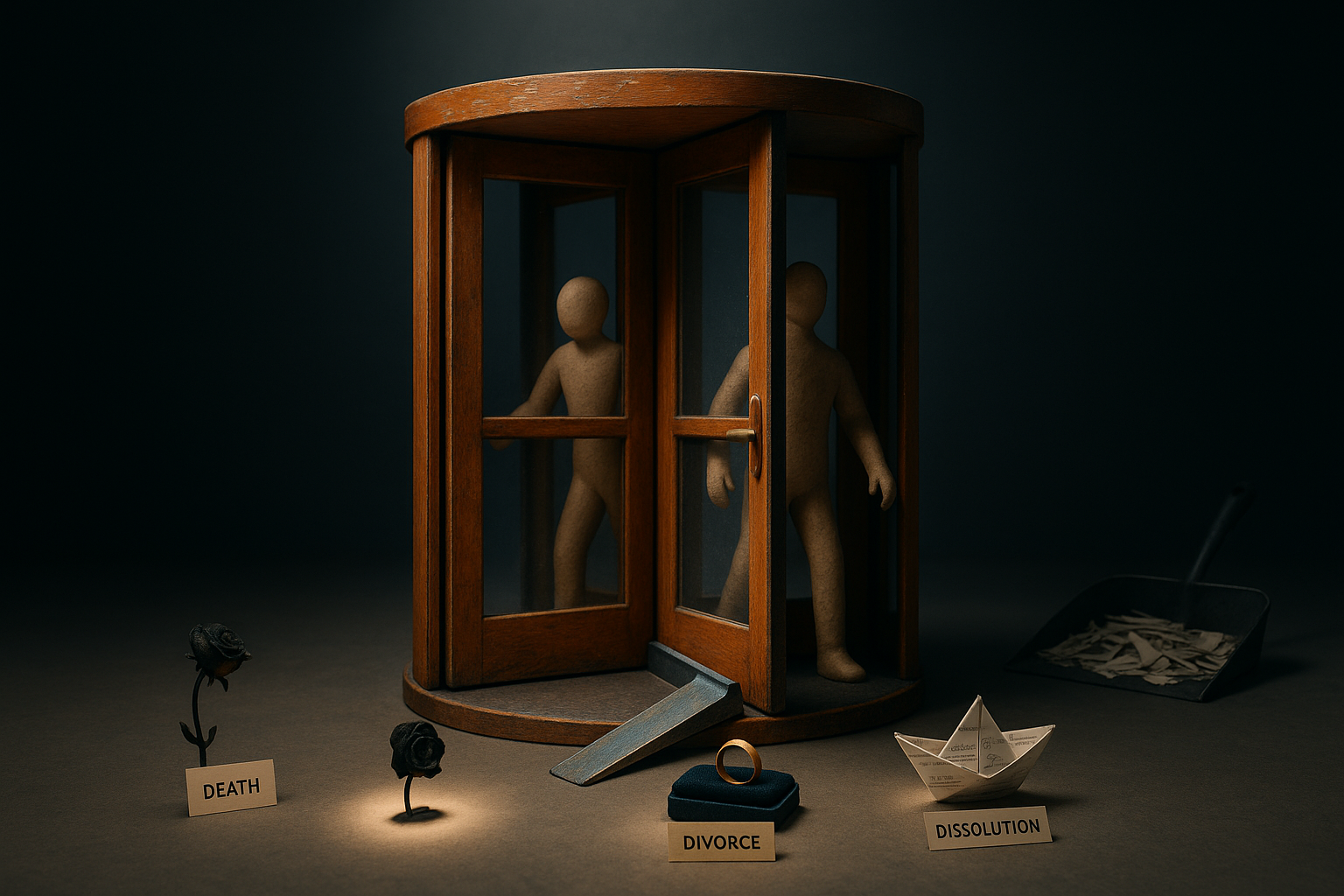
The only acceptable churn: the 3Ds
- Death. The person who championed you is gone.
- Divorce. They left the company.
- Dissolution. The business closed, the team was laid off, or the company was acquired.
Everything else is on you. You ignored the signal. You didn't close the loop. You shipped features instead of fixing problems. You let them go silent.
If that sounds utopian, look at who already lives close to it. ServiceNow reports a renewal rate of 98% to 99% in its investor reporting. Salesforce has reported customer attrition under 10% in its Form 10-K filings. Costco renewed 92.3% of its U.S. and Canada members in fiscal 2025, according to its Costco Wholesale Form 10-K. Costco's founders capped markups at 14% over cost on brand-name goods (How Costco Became the Anti-Wal-Mart), and membership fees now bring in about half its operating income. Costco makes money when members come back. That isn't luck. It's a system.
Silent churn: the customer who told you nine months early
Last year I signed up for a service. Great product, great team. Within a few months we had a ton of issues. Features were broken or didn't work the way we understood them to.
I reached out constantly. Calls with the Head of Product. Calls with Customer Success. Calls with Engineering. Within three months I knew we wouldn't renew. That was nine months before the contract ended.
Nobody followed up. No "Hey Spencer, we fixed this." They kept shipping new features while the core product stayed broken.
One month before renewal, a churn prevention team called, surprised we weren't renewing. I asked what about our experience would lead them to believe we would. Their answer: "We weren't aware you were having issues. We wish we had known."
They had known. I'd told them, repeatedly, for three months. The signals were there and nobody connected the dots. We churned the day we gave up and went quiet, not the day they called about renewal.
Silence from a customer is as good as churn. They've already decided. They just haven't told you yet.
Churn happens in the first session
My story was the slow version. Most customers decide much faster, and most never escalate the way I did.
I've worked with dozens of Series A YC companies as Head of Product, VP of Customer Experience, and onboarding specialist. What that work taught me is that there's no such thing as one-day, one-week, or one-year retention. Nine times out of ten, a customer knows whether they'll be a customer in that first interaction. There is no "come back later." The nurture emails and send-time tweaks are rounding errors next to that first moment.
Rule of thumb: if you wouldn't bet on a customer staying after their first session, no email sequence will save them.
Run the math
Almost every company I've worked with obsesses over the top of the funnel. Almost none ask: what does our business look like if we stopped churning?
The median private B2B SaaS company loses 9% to 16% of its revenue base every year to churn and downgrades, according to SaaS Capital's 2025 B2B SaaS Retention Benchmarks and Benchmarkit & Aleph's 2026 SaaS & AI Performance Benchmarks. Now take a company with 1,000 customers at $8,000 ACV, $8 million ARR, adding 100 new customers a year.
| Annual churn | Customers lost per year | Net gain per year | Customers after 5 years | ARR after 5 years |
|---|---|---|---|---|
| 8% (already beats the median) | 80 | 20 | 1,100 | $8.8M |
| 4% | 40 | 60 | 1,300 | $10.4M |
That's $1.6 million in additional revenue with the same sales effort, the same marketing spend, and the same 100 new customers a year. Only retention changed.
And that leaves out expansion. Top-quartile private SaaS companies run about 110-115% net revenue retention, with the median near 101% (SaaS Capital and High Alpha's 2025 SaaS Benchmarks Report). In SaaS Capital's survey, companies above 130% NRR grew at a median 50% a year; those below 90% grew at 15%.
The research has said this for decades. Valuing Customers, a 2004 study by Gupta, Lehmann and Stuart, found that a 1% improvement in retention raised firm value about 5%, versus about 0.1% for the same improvement in acquisition cost. McKinsey's Experience-Led Growth estimates it takes three new customers to replace the value of one you lose. In 1990, Reichheld and Sasser's Zero Defections found that cutting defections by 5 percentage points raised profits per customer 25% to 85% across the service businesses they studied.
You could double your sales team and still grow less than you would by improving retention a few points.
A word on benchmarks
Be suspicious of every number above, including mine. Most benchmark data is self-reported and filtered differently. "Our churn is 5%" if you exclude accounts under $20K. "Our NRR is 120%" if you count one giant enterprise expansion. Ask who was surveyed, how many, and how big. The only benchmark that can't lie to you is your own trend line.
The money you're already losing
Pendo's 2019 Feature Adoption Report, covering 615 of its customers' products, found that 80% of features are rarely or never used. Pendo extrapolates that public cloud companies spent up to $29.5 billion building them, and that a $50 million company can waste roughly $8.4 million a year this way. Only 12% of features generate 80% of usage, per the report's methodology PDF.
Meanwhile, the signal that would tell you what to fix rarely reaches you. John Goodman's summary of TARP's research, Basic Facts on Customer Complaint Behavior, found that only 1% to 5% of unhappy customers take a complaint to a manager or headquarters. In B2B, 75% complain to someone on the front line. Among customers with a major problem who never complained, only 9% bought again.
The complaint exists. It just never travels up. I've seen companies lose deals because navigation was confusing, and lose customers because login emailed a password and people got distracted in their inbox. These problems run for years before anyone looks.
Why everything you've tried hasn't worked
- Agile let you ship faster in the wrong direction.
- Product-led growth optimized for acquisition, not retention.
- Customer success is too busy fighting fires to prevent them.
- NPS measures sentiment, not behavior.
- Design thinking validated ideas and never checked outcomes.
Every one of these optimized execution. None fixed the hearing. Departments hit their numbers while the customer falls through the cracks, and the little truth that escapes the front line dies in the organizational telephone game.
Listening is the broken half of building. AI fixed fast. Nobody fixed hearing.
Investors won't push you here, either. I once tried to raise with 98% retention, a 70-80% close rate, and 80%+ margins, and heard: who cares about retention if you can hockey-stick revenue? Investor timelines aren't founder timelines. But no business ever died from keeping too many customers.
Always pick "end of the world"
There's a principle from Apple's Genius Bar: a problem is either the end of the world or it's not a big deal. Your customer picks one, and you get the other. Treat their issue as critical first, and they'll tell you it's not that bad, and trust you. Let them call it a disaster first, and you spend the conversation on defense, losing trust with every word.
That posture scales into a flywheel:
Retention → Usage → Expansion → Word of mouth + Sales → Conversion → back to Retention
Customers who stay use more. Customers who use more expand. Customers who expand become your referrals and case studies, which make sales more effective and convert prospects who also stay. Each turn is faster than the last. But retention is the foundation. Without it, there's no usage, no expansion, no proof, and you're buying every customer from scratch.
You can keep doing what you're doing, just faster: more at the top, churn compounding underneath, unused features at machine speed. Or you can change how you build, starting with how you listen. The dragon survives only because you keep feeding it.
The full system for building a company where customers can't be ignored is in my book Customer-Led Development.
If you'd rather stop treating churn as weather, subscribe to the Context Limit newsletter for more essays on listening as the half of building AI didn't fix.