From Product Theory: The Hidden Forces That Shape User Behavior — 40+ short chapters on why users behave the way they do.
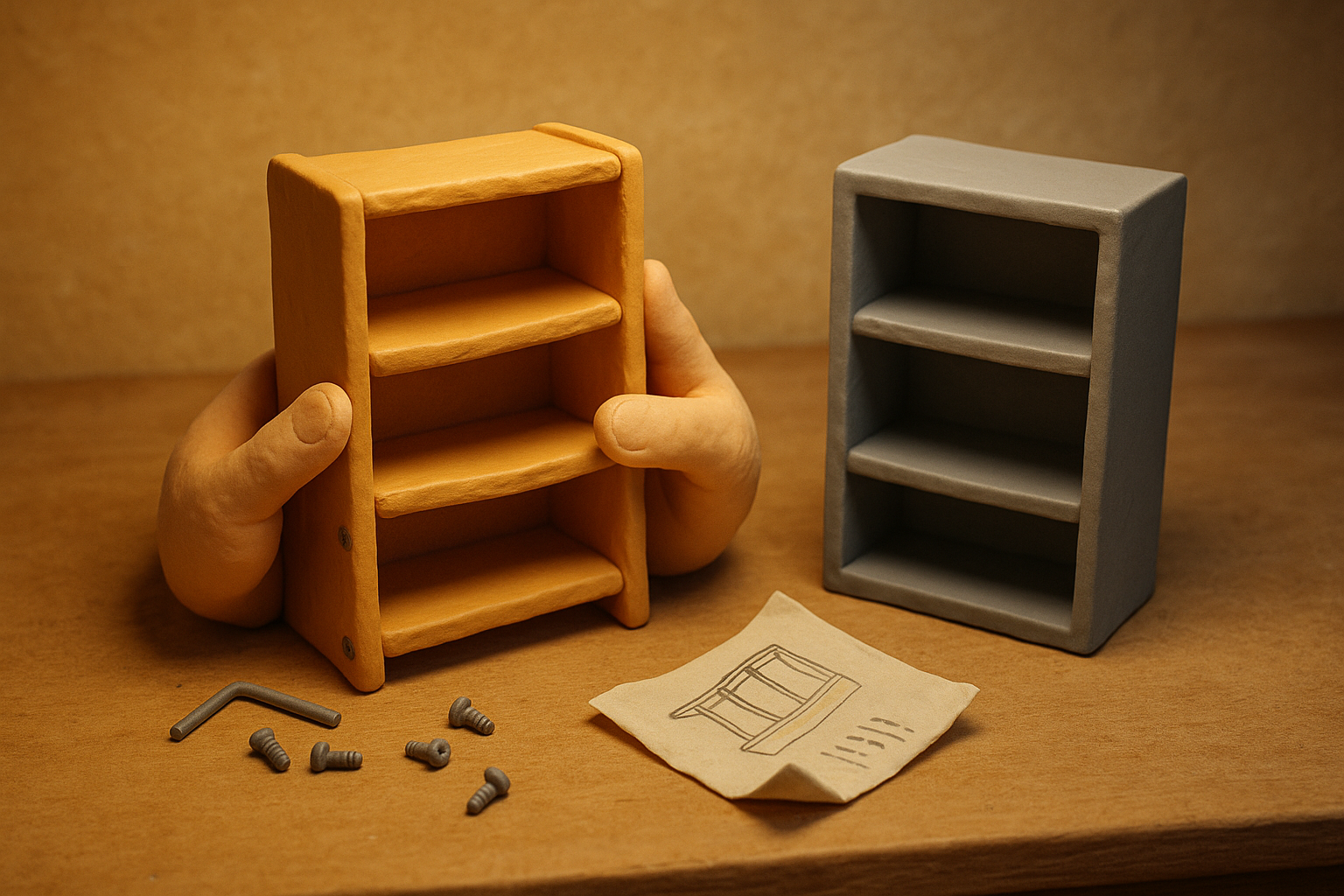
You build a bookshelf from IKEA. It takes three hours. You misread the instructions twice. One shelf comes out slightly crooked. The Allen wrench gives you a blister.
You love that bookshelf.
Someone offers to swap it for an objectively better one — sturdier, prettier, more expensive — at the same price. You decline. You don't want a better bookshelf. You want your bookshelf.
That irrational little swell of pride has a name. Michael Norton, Daniel Mochon, and Dan Ariely called it the IKEA effect: when people invest labor in creating something, they value it far beyond what it's objectively worth.
Labor, not clicks
This isn't about saying yes to a question or clicking through a nice onboarding flow. That's a different force. The IKEA effect is specifically about labor — users creating, configuring, or constructing something with their own hands.
The distinction matters because most products settle for the easy version. They ask you what you want. They pre-fill everything. They show you a polished demo. And they wonder why nobody sticks around.
The products that stick make you build something. Ugly, small, imperfect — doesn't matter. You made it.
The Canva example
Canva could have opened with a tour. A carousel of gorgeous templates. A "watch how it works" video. Instead, within the first five minutes, it puts a canvas in front of you and makes you do the work.
You drag an element. You resize the text. You pick a color that clashes, notice it clashes, change it. You nudge a shape half a pixel because it was bugging you. By the time you look up, you've made something.
It might be ugly. Objectively, a stock template would look better. But you don't want the stock template. You want the thing with your fingerprints on it — your choices, your minor imperfections. That thing is now, quietly, an extension of you.
Multiply that across a product and you get the real prize: leaving means abandoning what you built. A user with three saved designs isn't comparing feature lists with a competitor. They're deciding whether to walk away from their own work.
Why it works
Three things stack on top of each other:
- Competence signaling. Finishing something proves you're capable. The object becomes a small trophy of that competence.
- Effort justification. You need to believe your effort was worthwhile. Devaluing the result would mean you wasted your time — so you inflate the result instead.
- Personal association. You built it. It carries your choices. It becomes a part of you.
Endowment says we value what we own. Labor says we value what we worked for. The IKEA effect is both at once — which is why the attachment runs so much deeper than the object deserves.
The finish line is the whole game
Here's the part most teams miss, and it's the most important line in the research.
Norton, Mochon, and Ariely had people build IKEA boxes, fold origami, assemble Lego. Builders valued their creations far higher than non-builders valued the identical item — often by 5x or more. But the effect only appeared when people finished.
Start building and quit halfway, and the effect vanished entirely. It wasn't the labor that created value. It was the successful completion of labor.
This flips how you should read your onboarding funnel. A half-finished setup isn't a partial win. It's the opposite of what you want — effort spent, no payoff, a small residue of resentment. If users routinely drop off mid-onboarding, you're not building investment. You're manufacturing abandonment.
So design for completion, not for effort. Break the long process into short milestones. Make progress visible. Make the end achievable. Get them across the line, even if the first thing they make is tiny and bad.
Two users pay you the same subscription. One uses the product passively. One has built dashboards, saved templates, and onboarded their team. Same revenue this month. Radically different odds they're still here next year.
Rule of thumb: Let users build, and they'll love what they made.
One catch worth holding onto
The effort has to feel voluntary. Forced labor doesn't create attachment — it creates resentment. The whole thing rests on the user feeling they chose to invest. Which is a delicate balance: too little effort and there's no investment, too much and they quit before the finish line that makes it all work.
Where exactly that sweet spot sits, and the other ways this can quietly backfire, is a longer conversation than a single post can hold. But the core is simple enough to act on tomorrow: stop demoing, start making them build — and get them to done.
If this made your onboarding drop-off chart look a little different — or made you think fondly of some slightly crooked thing you built and refuse to give up — you can subscribe to the Context Limit newsletter, and I'll send the next idea when it lands.